
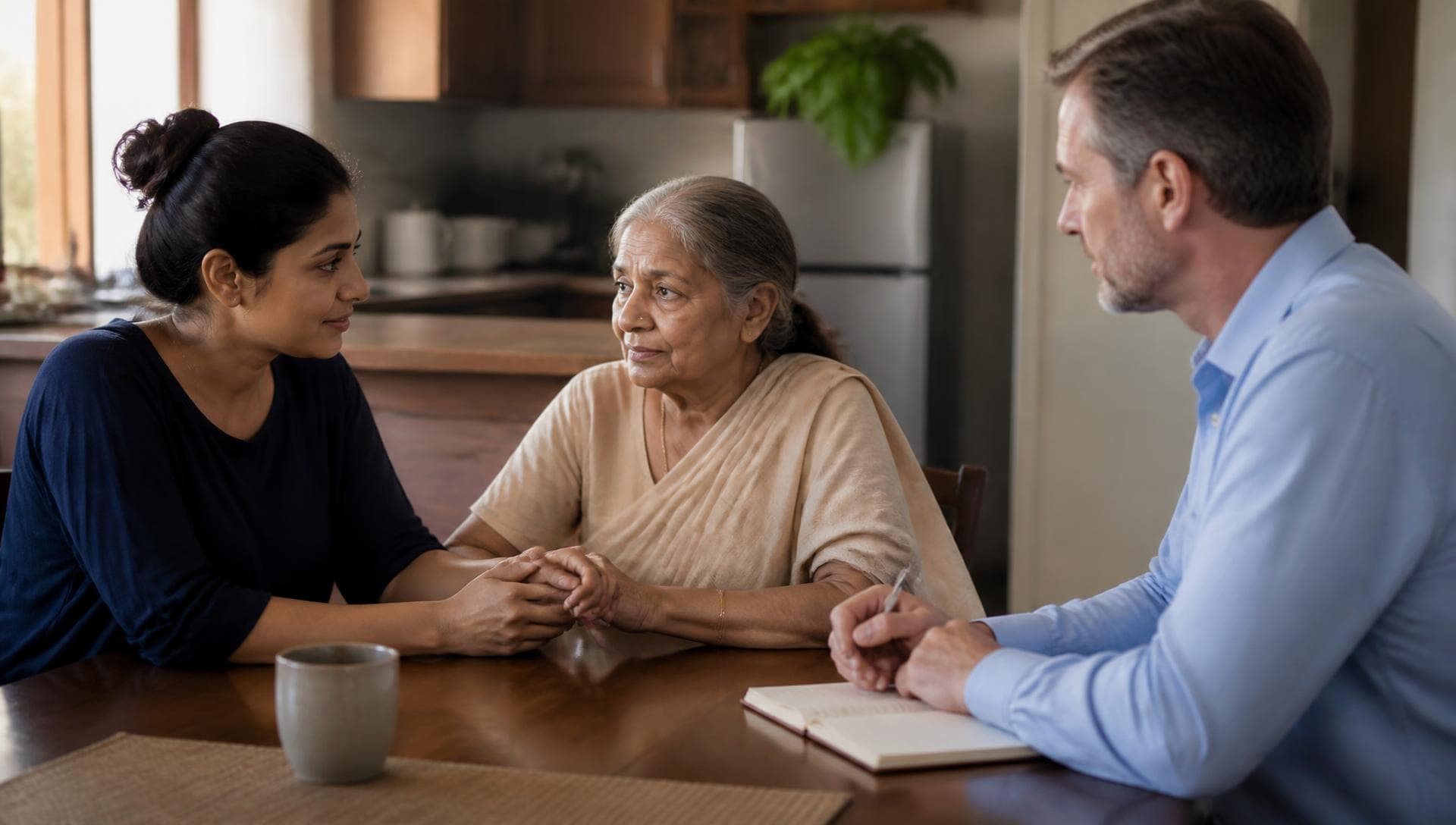
How care begins

Planning care with the person, not simply about them

A good assessment does more than list tasks. It should understand the person's life, what they want to keep doing, where support is needed and how risks can be managed without removing unnecessary choice.

Who this is for

Prospective clients, families, representatives and professionals

What you will learn

Know what will be discussed, how the person participates and what the care plan contains.

Speak with us

0115 681 2514

Before the assessment

We explain who will attend, the likely length and whether information is needed from family or professionals. You can request communication adjustments, an interpreter, Easy Read information or support from a trusted person or advocate.

About the person

Preferred name, communication, culture, faith, identity, relationships, routines, interests, strengths and what a good day looks like.

Care and daily living

Personal care, meals, hydration, medication, mobility, continence, sleep, household routines, appointments and community activities.

Health and professional involvement

Relevant conditions, recent changes, allergies, clinical instructions, equipment and the professionals involved. We ask only for information needed to plan safe support.

Risks and safeguards

Falls, skin, medication, nutrition, cognition, distress, environment, fire, access, lone working, safeguarding and contingency arrangements.

Outcomes and review

What the person wants support to help maintain or achieve, how progress will be understood and what should trigger a review.

Consent, capacity and involvement

The person should be supported to understand and take part. Capacity is decision-specific and time-specific. Where someone cannot make a particular decision, we follow lawful best-interests processes and consider authorised representatives, family knowledge and professional advice without treating another person's preference as automatically decisive.

From assessment to care plan

The care plan sets out agreed tasks, timing, preferences, staff instructions, risks, escalation, recording and communication. It should make clear what staff must do, what the person prefers to do themselves and what sits outside the service.

Risk assessment does not mean removing all risk

Risk planning should support safe participation. Controls may include equipment, prompts, environmental changes, communication, staff numbers, professional input or contingency plans. Restrictions require individual, lawful and proportionate justification.

Approving and reviewing the plan

The plan is checked by an appropriate manager before it becomes active. It is reviewed after commencement, at agreed intervals and sooner when circumstances change, including hospital discharge, incidents, medication changes, equipment changes, safeguarding concerns or feedback.

Answers

Frequently asked questions.

It may take place in the person's home or through another agreed method where appropriate. A home visit is often important where environment, access or equipment must be understood.

Yes. You can involve a family member, advocate or trusted person, subject to your wishes and lawful information sharing.

You can ask why information is needed and decline to discuss something. We will explain where missing information prevents safe planning or service acceptance.

MoreLoved Care's approved initial care assessment is provided without charge. Any different arrangement for a specialist external assessment would be explained in advance.

Yes. Reviews should update the plan when needs, wishes, risks or arrangements change.

Next step

Ready to take the next step?

Every enquiry begins with a conversation no commitment, no pressure.